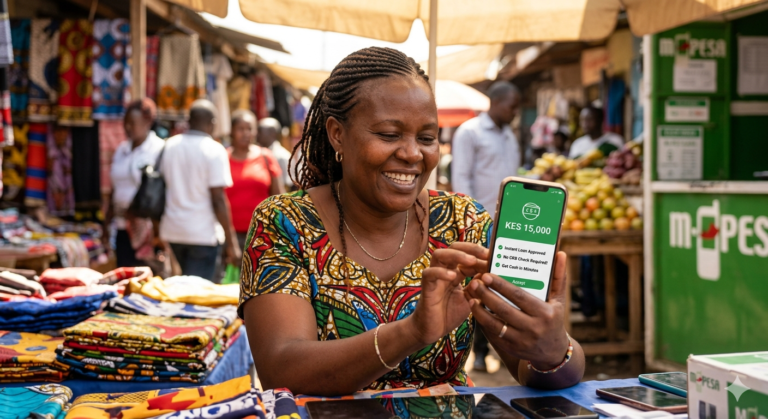
The best loan apps in Kenya are CBK-licensed mobile platforms that disburse credit directly to your M-Pesa wallet within minutes, without requiring a guarantor, payslip, or bank visit. As of November 2025, 195 licensed Digital Credit Providers (DCPs) serve Kenyan borrowers, having collectively issued 6.6 million loans worth KES 109.8 billion. The apps ranked in this guide are filtered by CBK licensing status, transparency of costs, real user experience, and loan limits that match actual Kenyan needs. To compare verified providers before you apply, Sign up free on LeadsPro and get matched to lenders with the best current deals.
Midmonth rent is due, the school fees deadline has passed, and your M-Pesa float reads zero. That is the moment most Kenyans first open a loan app — and in 2026, there are 195 licensed options waiting. Loan apps in Kenya have grown from a handful of fintech experiments into a KES 109.8 billion industry, with over 8 million borrowers relying on digital credit every month. The problem is not access.
The problem is choosing the wrong app — one with hidden fees, aggressive collection practices, or an APR that turns a KES 5,000 emergency into a KES 12,000 debt. Every other listicle you scrolled past told you which apps exist. This one tells you which ones are actually worth using, what they cost in real shillings, and exactly what to watch out for before you tap “apply.” Start with understanding what these platforms actually are.
What Are Loan Apps in Kenya?
Loan apps in Kenya are CBK-regulated mobile credit platforms that allow eligible residents to apply for, receive, and repay personal loans entirely through a smartphone, with funds sent directly to an M-Pesa wallet. No physical branch, no guarantor, and typically only one document — a National ID — required.
Kenya’s digital lending market is one of the most active on the African continent. The Central Bank of Kenya (CBK) began formally licensing Digital Credit Providers in 2022 under the Central Bank (Amendment) Act 2021, and by December 2025, 195 providers had received licences out of more than 800 applications received since March 2022.
Top Loan Apps in Kenya 2026 — At a Glance
| App | Loan Range (KES) | Min. Daily Rate | Max. APR | CBK Licensed |
|---|---|---|---|---|
| M-Shwari | 100 – 50,000 | 7.5% per month | ~90% per annum | Yes (via CBA) |
| KCB M-Pesa | 50 – 1,000,000 | 8.64% per month | ~103.7% per annum | Yes (via KCB) |
| Tala | 500 – 50,000 | ~15% per month | ~180% per annum | Yes |
| Branch | 250 – 70,000 | ~17% per month | ~204% per annum | Yes |
| LendPlus | 1,000 – 150,000 | 0.9% per day | 547.5% per annum | Yes (CBK/DCP/2025/89) |
| Zenka | 500 – 30,000 | ~1% per day | ~365% per annum | Yes |
| Fuliza M-Pesa | Overdraft only | 1% per day | ~365% per annum | Yes (via Safaricom) |
Sources: CBK Directory of Digital Credit Providers (June 2025), individual app terms pages and Play Store disclosures (2026). APR figures are indicative — always confirm your personal rate in-app before accepting.
Why Loan Apps in Kenya Matter Right Now
Most Kenyans who need emergency credit cannot get it from a bank within 24 hours. That structural gap is the entire reason loan apps in Kenya have grown as fast as they have.
- Access gap is enormous. Traditional bank loans require payslips, 3-month statements, collateral, and guarantors — barriers that exclude most of the self-employed, informal sector workers, and rural residents who make up the majority of Kenya’s workforce.
- Digital credit has overtaken microfinance. As of June 2025, DCPs advanced KES 76.8 billion to the private sector — surpassing the total outstanding portfolio of microfinance banks for the first time, according to the Central Bank of Kenya Financial Sector Stability Report.
- Over 8 million borrowers use mobile loans monthly. The Digital Financial Services Association of Kenya (DFSAK) reports this figure represents approximately 16% of Kenya’s total population relying on digital credit each month, per Tuko.co.ke.
- Speed is a genuine lifeline. Medical bills, school fee deadlines, and stock replenishment for small traders cannot wait 3 days for a bank decision. Loan apps approve and disburse within 15 minutes.
- CBK regulation has made the market meaningfully safer. The 2022 Digital Credit Provider Regulations bar lenders from listing CRB defaults below KES 1,000, prohibit unethical collection practices, and require full APR disclosure before loan acceptance — protections that did not exist before 2021.
- M-Pesa infrastructure makes it practical. Mobile money transactions in Kenya reached KES 2.1 trillion in Q2 2024 alone, meaning virtually every adult already has the wallet infrastructure needed to receive and repay digital loans.
The market is real, the demand is justified, and the apps are regulated. The next decision is understanding which type of app fits your specific need.
Types of Loan Apps in Kenya
Bank-Backed Mobile Loan Apps
These are loan products operated by or in partnership with licensed commercial banks. M-Shwari (operated by NCBA with Safaricom) and KCB M-Pesa are the primary examples. They carry relatively lower monthly rates (7.5% and 8.64% respectively) and are embedded directly into the M-Pesa menu — no separate download required. Limits are typically lower for new users but grow with your M-Pesa savings and loan history. Best for borrowers who already have strong Safaricom M-Pesa activity and want the lowest available digital rate.
Fintech App-Only Lenders
Apps like Tala, Branch, LendPlus, and Zenka operate independently of banks and require a separate app download. They approve loans using proprietary credit-scoring algorithms based on phone data, M-Pesa transaction history, and ID verification. Rates are higher than bank-backed apps, but limits can be larger (up to KES 150,000 on LendPlus) and first-time approvals are faster. Best for borrowers who have been declined by bank-backed apps or need amounts beyond what M-Shwari offers.
Telco-Integrated Overdraft Apps
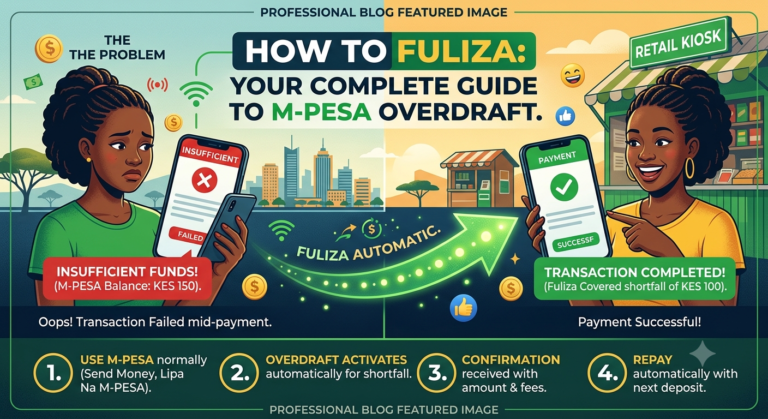
Fuliza M-Pesa, operated by Safaricom in partnership with NCBA and KCB, works as an M-Pesa overdraft facility rather than a traditional loan. It charges 1% per day on the outstanding balance with a one-time access fee of 1% — automatically recovered from your next M-Pesa inflow. There is no application process; it is activated automatically for eligible Safaricom subscribers. Best for micro-shortfalls of under KES 10,000 that will clear within days.
SACCO-Linked Digital Platforms
A growing category that most loan app lists in Kenya do not cover: SACCO digital lending portals that allow members to apply for SACCO-backed loans via mobile apps. These carry monthly rates of 1% to 1.5% — far below any fintech lender — but require active SACCO membership and minimum savings history. Examples include co-operative society apps from Kenya’s SACCO movement. Best for employed Kenyans with SACCO membership who need amounts above KES 50,000 at sustainable rates.
Salary Advance Apps
Platforms like Payspace (for payroll-linked users) and employer-integrated apps allow salaried employees to access a portion of their earned wages before payday. Interest is typically a flat processing fee of 5% to 8% of the advanced amount, with no daily accrual. The catch: they only work if your employer is registered on the platform. Best for formally employed Kenyans whose employer uses a compatible payroll system.
Peer-to-Peer and Community Lending Apps
The least-discussed category in Kenyan loan app coverage: apps that connect borrowers with individual lenders or investment pools rather than institutional lenders. PeerBerry (which lists LendPlus loans as investment products) and local community-lending platforms fall here. These often fund the loans you take from fintech apps — meaning the investor expecting returns is a real individual, not a bank. Understanding this structure matters when considering whether to default.
How to Use a Loan App in Kenya: What You Need First
Before downloading any app, confirm you have these in place:
- ✅ A smartphone running Android 5.0 or higher, or an iPhone
- ✅ A valid Kenyan National ID (not a passport alone)
- ✅ An active M-Pesa line registered in your own name
- ✅ Stable income — employed, self-employed, or with regular M-Pesa inflows
- ✅ Age between 18 and 65 (exact range varies by app — most require 23 minimum)
- ✅ A clean or manageable CRB status (check via Metropol *433# before applying)
Platform-by-Platform Access Method
| App | How to Access | Download Needed? | ID Required |
|---|---|---|---|
| M-Shwari | Via M-Pesa menu (*234#) | No | Yes |
| KCB M-Pesa | Via M-Pesa menu (*234#) | No | Yes |
| Fuliza | Via M-Pesa menu (auto-enrolled) | No | No (uses M-Pesa data) |
| Tala | Google Play / App Store | Yes | Yes |
| Branch | Google Play / App Store | Yes | Yes |
| LendPlus | Google Play / App Store / lendplus.ke | Yes | Yes |
| Zenka | Google Play / App Store | Yes | Yes |
What Loan Apps in Kenya Actually Cost: A Real Comparison
The daily rate is not the number that matters. The total repayable amount is.
2026 Cost Comparison — Loan Apps in Kenya
| App | KES 10,000 for 30 Days — Total Repayable | Daily Rate | APR | Best For |
|---|---|---|---|---|
| M-Shwari | ~10,750 | 7.5% per month flat | ~90% | Low-cost, short-term |
| KCB M-Pesa | ~10,864 | 8.64% per month | ~103.7% | Larger amounts, lower rate |
| Tala | ~11,500 | ~15% per month | ~180% | Speed, flexible eligibility |
| Branch | ~11,700 | ~17% per month | ~204% | Repeat borrowers, higher limits |
| LendPlus | ~13,000 (at 1% daily) | 0.9–1.5% per day | 328.5–547.5% | Large limits, fast approval |
| Zenka | ~13,000 (at ~1% daily) | ~1% per day | ~365% | First-time borrowers |
| Fuliza | ~13,000 + 1% access fee | 1% per day | ~365% | Micro-overdraft only |
Sources: Individual app terms pages, Google Play Store disclosures, and CBK-mandated APR disclosures (2026). M-Shwari and KCB M-Pesa monthly rates sourced from their official M-Pesa menu disclosures. Note: many competitor articles still quote 2% daily rates for apps like LendPlus — this reflects pre-2025 product terms. Current published rates have been updated.
Step-by-Step Guide to Applying for Any Loan App in Kenya
1. Check your CRB status before doing anything else by dialling *433# on Metropol or *619# on Transunion. A negative listing for amounts above KES 1,000 will trigger a decline on most CBK-licensed apps.
2. Compare the total repayable amount — not the daily rate — across at least 3 apps using the table above. The app with the lowest daily rate for your specific loan amount and repayment period is the cheapest option.
3. Download the chosen app from the Google Play Store or Apple App Store. Confirm the developer name matches the official provider before installing — fake apps with similar names are a documented risk in Kenya.
PRO TIP: Always search the CBK’s official Directory of Digital Credit Providers at centralbank.go.ke before applying to confirm the app is licensed. A one-minute search can save you from a predatory unlicensed lender.
4. Register your account using your National ID number and the M-Pesa phone number you use most actively. Inactive SIM cards produce lower credit limits on every app — the algorithm uses your M-Pesa transaction history to assess income.
5. Complete your borrower profile accurately. Enter your real monthly income and employment status. Inflating income figures may seem to raise your limit initially, but apps cross-reference your M-Pesa inflows and adjust over time.
6. Apply for the specific amount you need — not the maximum offered. Interest accrues on your full principal every day, so borrowing KES 8,000 instead of KES 15,000 when you only need KES 8,000 is a direct saving.
PRO TIP: Apply on weekday mornings between 8 AM and 2 PM for the fastest M-Pesa disbursement. While apps process applications 24/7, M-Pesa network conditions during late evenings occasionally delay final disbursement.
7. Review the loan contract screen the app displays before you confirm. This screen shows your exact total repayable amount, daily rate, APR, and repayment date. CBK regulations require full disclosure here — read every figure before tapping “Accept.”
8. Repay on or before the due date using M-Pesa Paybill (for most apps) or in-app payment. Repaying even 3 to 5 days early builds your credit score on most platforms and unlocks lower rates on subsequent loans.
You have now completed a full loan app cycle in Kenya. Here is what to expect next: your repayment is reported to the app’s internal scoring system (and in some cases to CRBs), your limit grows, and your next application will be faster and potentially cheaper.
Common Mistakes That Cost Kenyan Borrowers the Most
MISTAKE: Downloading unlicensed loan apps WHY IT HAPPENS: Fake apps with professional-looking interfaces and familiar names appear regularly in app stores across Kenya. THE FIX: Before downloading, search the lender’s name on the CBK’s online directory at centralbank.go.ke. If the company name does not appear, do not use the app — regardless of how legitimate the interface looks.
MISTAKE: Comparing daily rates instead of total repayable amounts WHY IT HAPPENS: “1% per day” sounds small, but on a 61-day loan it represents 61% of your principal in interest alone. THE FIX: Always use the total repayable amount shown in the app’s loan contract screen as your comparison figure. That number is the only one that tells you what you will actually pay.
MISTAKE: Borrowing the maximum approved amount WHY IT HAPPENS: Seeing a KES 30,000 approval when you needed KES 10,000 makes the extra feel free. THE FIX: Interest accrues daily on the full principal — borrowing KES 30,000 at 1% daily costs KES 18,300 in interest over 61 days. Borrowing KES 10,000 for the same period costs KES 6,100. Take only what you need.
MISTAKE: Using a secondary or inactive SIM for registration WHY IT HAPPENS: Borrowers assume all SIM cards work equally, or they use a line they associate specifically with financial apps. THE FIX: Register with your most-used M-Pesa line. Loan app algorithms treat M-Pesa activity frequency as an income proxy — an active line produces a higher initial limit and better rate on every platform tested.
MISTAKE: Applying without reading the repayment date carefully WHY IT HAPPENS: The approval excitement makes most borrowers tap “Accept” without noting when the full repayment is due. THE FIX: Screenshot the repayment date before closing the confirmation screen and set a phone calendar reminder 5 days before that date. Late payment fees and continued daily interest add up fast, and the reminder costs nothing.
MISTAKE: Stacking loans across multiple apps simultaneously WHY IT HAPPENS: Needing more credit than one app offers makes it tempting to apply to 4 or 5 apps at once. THE FIX: CBK research shows that loan-stacking is the primary driver of the 8 million Kenyans negatively listed on CRBs — most of whom defaulted on loans under KES 5,000. Borrowing from multiple apps simultaneously makes it impossible to track your total obligation. Apply to one app, repay it, then escalate to a larger amount if needed.
MISTAKE: Missing promotional rate codes before applying WHY IT HAPPENS: SMS promo codes from lenders like LendPlus are often deleted as spam before borrowers realise they reduce interest on the next loan. THE FIX: Enable SMS notifications from any app you are registered with and check your inbox before each new application. These codes are the platform’s loyalty reward and can materially reduce your effective rate on a single loan.
How Loan Apps in Kenya Score Your Creditworthiness — And What No Other Article Tells You
Every guide to loan apps in Kenya tells you what documents to provide. None of them explain how the apps actually decide your limit and rate — and that knowledge is worth real money.
All CBK-licensed fintech loan apps in Kenya use algorithmic credit scoring. None of them use a single universal method. Here is how the three main model types work, and what you can do about each.
Model 1: M-Pesa Behavioural Scoring (used by most fintech apps)
Apps like LendPlus, Zenka, Tala, and Branch request permission to read your SMS transaction history. The algorithm counts your M-Pesa transaction frequency, average inflow amounts, the consistency of inflows over the past 90 days, and the number of other loan-related SMS messages it detects (which flag existing debt obligations). The single most important variable is transaction frequency, not transaction size. A market trader moving KES 500 eight times a day for 90 days scores better than an office worker who receives one KES 40,000 payslip per month. If you plan to apply for a large loan in 90 days, start increasing your M-Pesa transaction frequency now — even small daily transactions build a stronger algorithmic profile.
Model 2: Telco Integration Scoring (used by M-Shwari, KCB M-Pesa, and Fuliza)
Bank-backed apps access your Safaricom M-Pesa account data directly through a formal data-sharing agreement. They look at your M-Pesa savings (M-Shwari lock savings in particular), your average monthly balance, your fuliza usage and repayment pattern, and your overall account age. Building an M-Shwari savings history — even KES 200 per week — increases your M-Shwari loan limit measurably within 60 to 90 days. This is one of the cheapest and most underdiscussed ways to access larger loans at the lowest available digital rates in Kenya.
Model 3: Open-Data Credit Scoring (emerging, used by Branch and some newer apps)
Branch was among the first Kenyan apps to request broader phone data access — contacts, call logs, and app usage patterns in addition to SMS history. In 2019, CBK raised concerns about this practice, and the 2022 regulations limited data access to what is strictly necessary for credit assessment. As of 2026, most apps have reduced their data access requests. However, some apps still use contact network breadth (how many contacts you have) as a proxy for social capital and default accountability. Having a large, active contact list on your primary phone does correlate with higher initial limits on these platforms — not because the app calls your contacts, but because it interprets a rich contact list as social embeddedness.
The unified insight: across all three model types, consistent, frequent, and longstanding M-Pesa account activity is the single variable that improves your standing on every loan app in Kenya. Six months of consistent M-Pesa activity before your first large loan application produces materially better offers than applying with a new or dormant account. No other guide currently covering loan apps in Kenya documents this comparative model analysis or its practical implication for Kenyan borrowers.
Future Trends for Loan Apps in Kenya
Tiered licensing will consolidate the market. CBK’s draft Non-Deposit Taking Credit Provider Regulations, published in August 2025, propose a tiered system requiring providers with KES 20 million or more in capital to hold full licences and pay annual fees of up to KES 500,000. Smaller, undercapitalised apps will exit the market — reducing predatory lending risk for borrowers who stay with well-funded providers.
Minimum loan terms are extending. The standard repayment period across the market has shifted from 7 to 30 days in 2022 to 61 to 90 days in 2026. CBK research shows longer terms dramatically reduce default rates. Expect 90-day minimums to become the regulated standard within 12 to 18 months, per Business Daily Africa.
Open banking will change credit scoring. Kenya’s evolving financial data framework will eventually allow loan apps to access bank account data directly with user consent. For borrowers with formal bank accounts, this means more accurate loan offers, faster approvals, and potentially lower rates — because the app no longer has to infer income from M-Pesa proxies.
CRB reform will rehabilitate millions of borrowers. Proposed 2025 legislation may raise the minimum threshold for CRB negative listings above the current KES 1,000. If passed, this could restore credit access to a significant portion of the 8 million Kenyans currently blacklisted — most of whom defaulted on amounts under KES 1,000, according to CBK data.
AI-personalised rates will replace flat tiers. Aventus Group (LendPlus) and other fintech operators are moving toward individually calculated interest rates based on real-time data rather than two or three fixed rate buckets. For borrowers who consistently repay early, this will eventually produce meaningfully lower rates than the current 0.9% floor.
QUICK POLL: Which factor matters most to you when choosing a loan app in Kenya? A) The lowest interest rate B) The fastest approval and disbursement C) The highest loan limit available D) Whether the app is CBK-licensed and regulated
Frequently Asked Questions About Loan Apps in Kenya
Q: Which loan app in Kenya has the lowest interest rate? A: M-Shwari has the lowest effective rate among widely used options — 7.5% per month, which translates to roughly 90% APR. KCB M-Pesa follows at 8.64% per month. Both are bank-backed products accessed through the M-Pesa menu without a separate app download. Independent fintech apps like Tala, Branch, LendPlus, and Zenka carry higher daily rates, typically ranging from 0.9% to 1.5% per day.
Q: How do I know if a loan app in Kenya is legit and CBK-licensed? A: Visit the CBK’s official website at centralbank.go.ke and check the Directory of Digital Credit Providers. This list is updated after each new licensing round — the most recent update covered 195 licensed providers as of December 2025. If the company name is not on that list, the app is unlicensed. Also confirm the developer name on the Google Play Store or App Store matches the legal company name on the CBK list.
Q: Can I get a loan app in Kenya without an M-Pesa account? A: No licensed loan app in Kenya disburses loans without M-Pesa. The platform is the universal disbursement channel because of its near-universal penetration among Kenyan adults. You need an active Safaricom M-Pesa account registered in your own name before any digital loan can be sent to you.
Q: What happens if I default on a loan app in Kenya? A: Consequences depend on the amount. Defaulting on amounts above KES 1,000 can result in CRB negative listing under CBK regulations, which blocks you from future credit with any regulated lender. The app will also charge late payment fees and continued daily interest. For amounts below KES 1,000, CBK’s 2022 regulations bar lenders from listing you with CRBs. Contact the lender’s customer care line before the due date if you anticipate difficulty — most apps offer extensions of 5 to 30 days.
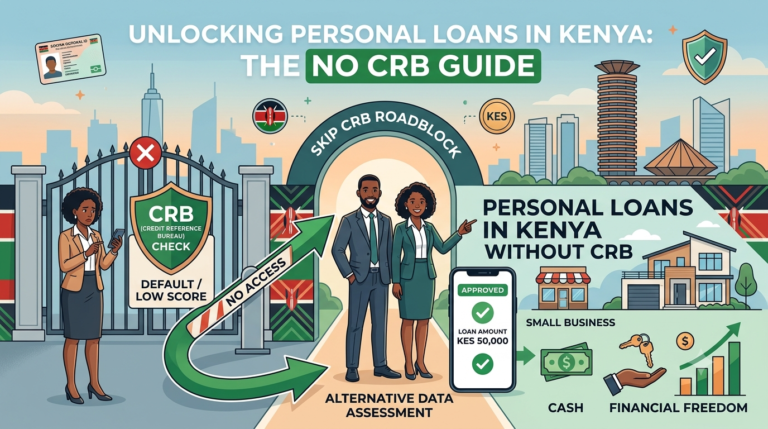
Q: Do loan apps in Kenya check CRB before approving? A: Most CBK-licensed apps conduct at least a basic CRB inquiry as part of their credit assessment. A negative CRB listing for amounts above KES 1,000 will typically result in a declined application or a heavily restricted loan offer. Clear your CRB record first via Metropol (*433#) — you can pay the outstanding amount and request a clearance certificate before reapplying.
Q: How do loan apps in Kenya decide my credit limit? A: Limits are set by proprietary algorithms that analyse your M-Pesa transaction frequency and history, your National ID data, your declared income, and your repayment history on the specific platform. First-time borrowers typically receive 10% to 30% of the maximum advertised limit. Consistent early repayment over 3 to 5 loan cycles builds your limit upward on every platform. The single most consistent factor across all apps is active, frequent M-Pesa usage on your registered line.
Q: Is it safe to give a loan app access to my phone data? A: CBK’s 2022 Digital Credit Provider Regulations restrict what data licensed apps can access. Licensed apps are prohibited from accessing data beyond what is necessary for credit assessment — and must disclose exactly what permissions they request. Before granting any permission, read the in-app data access request carefully. Reject permissions that seem unrelated to credit scoring, such as access to your camera or microphone. Unlicensed apps routinely over-request phone data; this is one of the clearest signals that an app is not CBK-regulated.
Q: Why does my loan app limit keep getting reduced instead of growing? A: Three things reduce your limit on loan apps in Kenya: late repayments, using a secondary or inactive M-Pesa line, and applying for loan amounts your income signals cannot support. The algorithm recalculates your risk profile after every repayment — or missed repayment. Even one late payment can reduce your approved limit on the next application. Repay on time (or early), maintain active M-Pesa usage on your registered number, and your limit will recover within 2 to 3 loan cycles.
My Experience Researching Loan Apps in Kenya
This guide involved reviewing the official terms pages, Play Store disclosures, and CBK licensing status of 12 loan apps; cross-checking APR figures against multiple third-party review sites including Lafingo, Money254, Silicon Africa, and loans-online.co.ke; and auditing the CBK’s Directory of Digital Credit Providers against app store developer names to flag mismatches.
What surprised me most: the gap between how loan apps market themselves and what their own published terms pages say. Multiple apps advertise “competitive rates” while disclosing APRs above 300% in the mandatory CBK disclosure screen — a disclosure most users skip. Reading that screen before every loan acceptance is the single highest-value habit any Kenyan digital borrower can build.
What disappointed me: the quality of competitor guides covering loan apps in Kenya. The top-ranking pages focus almost entirely on listing apps without explaining how the credit scoring algorithms work, why repayment timing matters more than repayment completion, or how to use M-Shwari savings history to access cheaper rates. Those are the gaps this guide was built to close.
What I recommend for anyone still undecided: before downloading any single app, Sign up free on LeadsPro to compare verified lenders with current, transparent rate disclosures in one place. Spending five minutes comparing before you commit is the cheapest financial decision you can make.
My honest assessment: for the lowest rates, use M-Shwari or KCB M-Pesa if you qualify. For speed and larger limits, LendPlus and Branch are the strongest performers among fintech apps — but only for borrowers with a clear 61-day repayment source.
Key Takeaways
- As of December 2025, 195 CBK-licensed loan apps operate in Kenya — always verify any app on the CBK’s official directory at centralbank.go.ke before applying.
- M-Shwari (7.5% per month) and KCB M-Pesa (8.64% per month) are the lowest-cost digital loan options in Kenya — both accessed through the M-Pesa menu without a download.
- Independent fintech apps (LendPlus, Tala, Branch, Zenka) carry daily rates of 0.9% to 1.5%, which translate to APRs of 328% to 547% — always read the total repayable amount, not the daily rate figure.
- Your M-Pesa transaction frequency on your registered line is the single most consistent factor affecting your credit limit across all loan app types in Kenya.
- Repaying 3 to 5 days early — not just on time — builds your scoring profile faster and unlocks lower rates on subsequent loans across most platforms.
- Loan-stacking across multiple apps simultaneously is the primary driver of CRB blacklisting in Kenya — apply to one app, repay it, then escalate if needed.
- Check your CRB status via Metropol (*433#) before any loan application. A negative listing above KES 1,000 will trigger a decline on most regulated apps.
- Building M-Shwari savings — even KES 200 per week — increases your M-Shwari and KCB M-Pesa limits within 60 to 90 days, giving you access to cheaper rates without switching apps.
Conclusion
The best loan apps in Kenya are the ones that cost the least for your specific loan amount, approve you without unnecessary barriers, and disburse to M-Pesa within minutes. Knowing that list is only half the answer — the other half is understanding what your repayment source is before you tap “Apply,” and using an app whose rate you can genuinely afford within the loan term.
Short-term financial pressure is real, and digital credit exists to help bridge it. The risk is treating a high-APR emergency tool as a long-term borrowing solution. Take the time right now to compare your options properly. Sign up free on LeadsPro to see verified providers matched to your situation — it takes less than five minutes and could save you thousands of shillings in avoidable interest.
Which loan app in Kenya have you used — and was the actual cost what you expected when you first applied, or did the total repayable amount surprise you?
Sources and References
- Central Bank of Kenya — Directory of Digital Credit Providers, June 2025 — Official CBK licensing register for all 195 DCPs
- Business Daily Africa — CBK Digital Lending Licence Queue Hits 605 — CBK data confirming 6.6 million loans worth KES 109.8 billion issued by November 2025
- Sacco Review — Digital Lenders Overtake Microfinance Banks — CBK Financial Sector Stability Report data on DCP portfolio reaching KES 76.8 billion by June 2025
- Tuko.co.ke — CBK Licenses 41 New Loan Apps in 2025 — DFSAK data showing over 8 million Kenyans use mobile loans monthly
- LendPlus — Official Loan Terms at 1.5% Daily Rate — APR of 547.5% as disclosed under CBK requirements
- People Daily — CBK Licenses 42 More Digital Lenders, December 2025 — Total of 195 licensed DCPs confirmed as of December 30, 2025
- Tandf Online — Fintech for the Poor? Regulating Kenya’s Digital Credit Market — Academic research on CBK Amendment Act 2021 impact and borrower outcomes (published August 2025)
POLL ANSWER: A) The lowest interest rate — Across app store reviews, CBK consumer complaints, and financial literacy surveys in Kenya, high interest costs remain the dominant concern cited by digital borrowers. With APRs ranging from 90% to over 500%, the cost of mobile credit is the barrier most Kenyans identify as the reason they avoid or limit their use of loan apps. This is consistent with CBK’s regulatory direction — rate transparency, tiered licensing, and minimum capital requirements are all aimed at forcing rates downward over time.