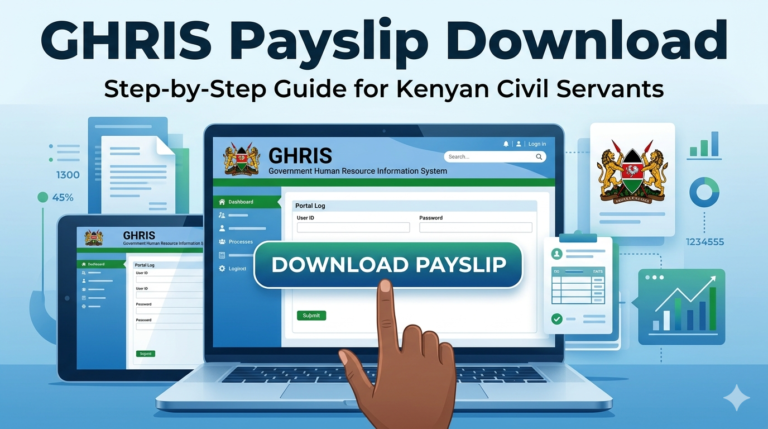
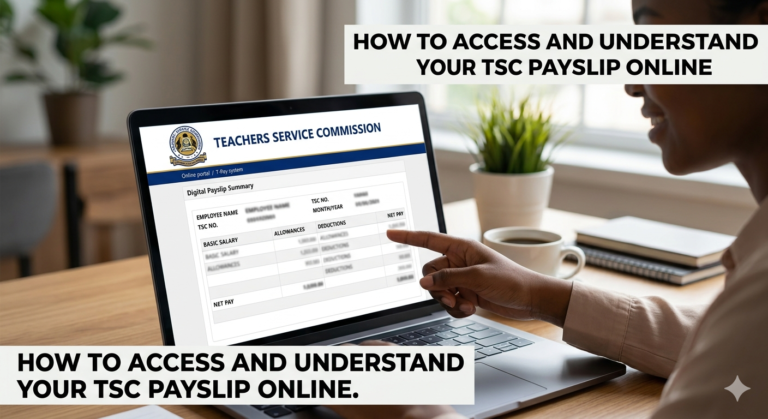
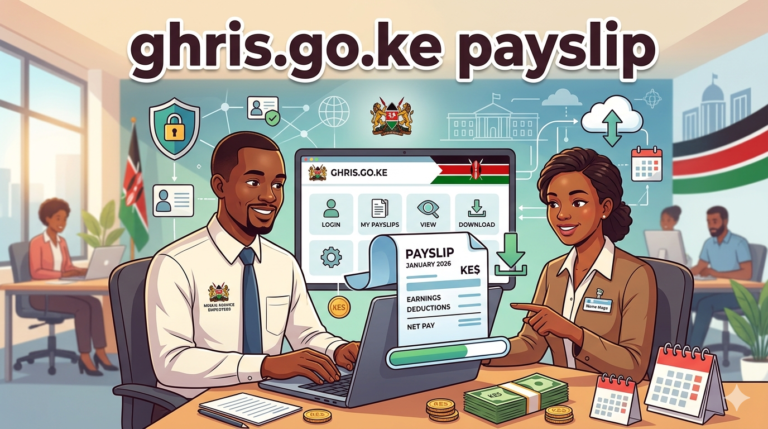
Your uhr.kenya.go.ke payslip is the official digital salary statement issued by the Government of Kenya to all public servants — teachers, police officers, county workers, and civil servants across ministries. You access it by visiting uhr.kenya.go.ke, logging in with your Employee Number and password, and navigating to the Payroll section. The portal is free, mobile-friendly, and available 24/7. If you need verified loan providers who accept UHR payslips, Sign up free at LeadsPro Kenya to connect with lenders offering civil servant check-off deals.
Every end of month, 1.05 million public servants across Kenya wait for one document before they can walk into a bank, SACCO, or lending office. That document is the uhr.kenya.go.ke payslip — and most people still do not know how to get it without calling someone at headquarters. The UHR (Unified Human Resource) portal replaced the fragmented IPPD and early GHRIS systems starting December 2024, and the upgrade brought new deductions, new login flows, and new confusion. This guide cuts through all of it.
You will know exactly how to register, log in, download your payslip, read the 2026 deductions, and use that document to access loans — faster than the person sitting next to you in any bank queue.
What Is the uhr.kenya.go.ke Payslip?
The uhr.kenya.go.ke payslip is a government-issued digital salary statement that replaces paper payslips for all employees on the public service payroll in Kenya. It is generated monthly through the Unified Human Resource (UHR) system, managed by the Ministry of Public Service.
The system matters because it is your single source of truth — it links your TSC number, KRA PIN, SHA contributions, NSSF, and Housing Levy in one place. With 540,523 Unified Payroll Numbers (UPNs) issued between January 2020 and March 2024, this portal is the backbone of Kenya’s government payroll.
Key facts about the UHR payslip portal in 2026:
| Feature | Detail |
|---|---|
| Official URL | uhr.kenya.go.ke |
| Managed by | Ministry of Public Service, Kenya |
| Cost to access | Free |
| Login credentials | Employee Number + Password |
| Payslip update cycle | Monthly (between 20th–25th) |
| File format | PDF (downloadable) |
| Mobile access | Yes — Chrome, Firefox, Safari |
The December 2024 upgrade from IPPD to the HRIS-Kenya Payroll System affected all Ministries, Departments, Agencies, and Counties (MDACs). If your login previously worked on GHRIS and now redirects you, that transition is why — your credentials carry over.
Why Your uhr.kenya.go.ke Payslip Matters Right Now
Kenya’s public service workforce of 1.05 million workers consumed roughly Ksh 1.25 trillion in salaries in the 2024/25 financial year, according to Nation Africa. Every one of those workers needs a payslip for daily financial life.
Here is what you cannot do without a current, downloaded UHR payslip:
- Apply for a check-off loan. Banks and SACCOs require your last 3 payslips before any loan approval. Mwananchi Credit, Kingdom Bank, MOGO Kenya, and other lenders will reject your application without them.
- File your annual tax return. Your P9 form — required by KRA before June 30 each year — lives on the same portal. Miss it and you risk a non-compliance penalty.
- Verify your 2026 deductions. SHA replaced NHIF with a mandatory 2.75% of gross salary. NSSF contributions moved to 6% of gross pay. Your Housing Levy remains at 1.5%. These three changes alone mean your net pay looks different from 2024 — and you need your payslip to verify the figures are correct.
- Prove income for rentals or visa applications. Landlords in Nairobi and Nakuru increasingly request a government-verified payslip before signing a lease, according to public servant community feedback collected across rental platforms.
- Catch ghost salary errors early. The government’s own crackdown on duplicate payroll entries since 2024 means your salary record could be affected. Your payslip is your evidence if something goes wrong.
According to Kenya National Bureau of Statistics, the public sector remains one of Kenya’s largest formal employers. That scale means the portal handles enormous traffic — which is exactly why you need to know how to use it before you urgently need it.
Read on for every step, from first-time registration to downloading your payslip in under five minutes.
Types of Employees Who Use the UHR Payslip
TSC Teachers
Teachers under the Teachers Service Commission make up the largest group on the UHR system — with 381,742 UPNs issued to TSC employees alone as of March 2024. TSC teachers previously used the T-Pay portal separately; the UHR system now consolidates their payroll alongside TMIS records. Some TSC employees still use the CP2 login via a separate link; both systems draw from the same payroll database.
Civil Servants in National Government
All staff in ministries, departments, and agencies (MDAs) from Job Group CSG17 (entry level, around Ksh 16,920/month) to CSG4 (director-level) access payslips through uhr.kenya.go.ke. The July 2025 salary review approved by the Salaries and Remuneration Commission (SRC) means new figures appear on payslips effective July 1, 2025.
County Government Employees
Most county workers are now integrated into the national UHR system. A handful of counties maintained separate systems previously, but HRIS-Kenya integration has been phasing those out since December 2024. If you are a county employee unsure which portal applies to you, uhr.kenya.go.ke is the safest starting point.
Police, KDF, and Disciplined Forces
Officers in the National Police Service, Kenya Defence Forces, and Kenya Prisons Service access payslips through the UHR portal. Their payslip structure includes additional allowances such as risk allowance and uniform allowance that do not appear on standard civil servant payslips.
Parastatal and University Employees
Employees of public universities and parastatals with signed agreements — such as those listed by Shalom Base SACCO — also access payslips through the UHR or related GHRIS system, depending on their institution’s level of integration.
How to Access Your uhr.kenya.go.ke Payslip: What You Need First
Before logging in, confirm you have the following ready:
- Your Employee Number (also called Personal Number or UPN)
- Your password from initial GHRIS or UHR registration
- A stable internet connection — mobile data works, but home broadband is faster for PDF downloads
- A supported browser: Google Chrome, Mozilla Firefox, Microsoft Edge, or Safari (avoid outdated Internet Explorer)
- Your National ID number and KRA PIN if registering for the first time
Step-by-Step Guide to Login and Download Your Payslip
- Open your browser and type the official URL: uhr.kenya.go.ke — confirm the address bar shows the
.go.kedomain before entering any credentials. Fake phishing sites mimic the portal. - Click “Government of Kenya Employees” or the Employee Login button on the homepage. Do not use third-party login aggregators.
- Enter your Employee Number in the username field and your password in the password field. These are the same credentials you created during GHRIS registration.
PRO TIP: If you have not logged in since the December 2024 IPPD upgrade, your password may have been reset by the system. Use the “Forgot Password” link before calling HR — it is faster.
- Click Login and wait for your dashboard to load. First-time logins after the 2024 system upgrade may prompt you to verify your phone number.
- Navigate to the “Payroll” or “Payslips” tab on your dashboard. The exact label depends on your employee category — teachers may see “My Payslip” while civil servants see “Payroll Records.”
- Select the month and year of the payslip you need. The portal typically shows the last 12 months prominently. For loan applications, download the three most recent months.
PRO TIP: Payslips are usually available between the 20th and 25th of each month. If you cannot see the current month yet, check back on the 23rd.
- Click “Download” — the file saves as a PDF to your device. On mobile, check your Downloads folder. On desktop, check the default downloads location set in your browser.
- Log out immediately after downloading, especially if you are using a shared device or cybercafé computer.
You have now completed your payslip download. Here is what to expect next: the PDF is immediately accepted by banks, SACCOs, KRA, and landlords as an official government document.
2026 Deductions on Your UHR Payslip: What Changed
This section covers what every competitor article misses — and what thousands of civil servants are searching for right now.
When you open your 2026 payslip and compare it to 2023 or 2024, you will see a significantly different deductions column. Three policy changes have reshaped the net pay of every public servant in Kenya, and understanding them helps you dispute errors, plan your budget, and calculate your real loan eligibility.
SHA (Social Health Authority) — 2.75% of Gross Salary
SHA replaced the old NHIF system from October 2024. Unlike NHIF, which had a flat cap at Ksh 1,700/month regardless of salary, SHA is calculated as a percentage of whatever you actually earn. A teacher earning Ksh 45,000 gross now contributes Ksh 1,237.50 to SHA monthly. A senior civil servant earning Ksh 120,000 contributes Ksh 3,300. This is why your net pay looks lower — not because your salary was cut, but because your health contribution scaled up with your earnings. The SHA deduction appears clearly labelled on your UHR payslip dashboard.
NSSF — 6% of Gross Salary (New Rates from 2024)
The National Social Security Fund Act 2013 finally took effect, raising contributions from the previous flat Ksh 200/month to 6% of gross salary, split equally between employee and employer. Your payslip now shows the employee portion: 6% of your gross. On a Ksh 50,000 salary, that is Ksh 3,000/month toward your pension — a 15x increase from the old rate.
Housing Levy — 1.5% of Gross Salary
Introduced in 2023 and maintained through 2026, the Affordable Housing Levy deducts 1.5% of gross salary. Your employer contributes an equal 1.5%. On your UHR payslip, this appears as “Housing Levy” in the deductions column. A civil servant earning Ksh 60,000 gross loses Ksh 900/month to this levy.
The Net Effect on Loan Eligibility
Most lenders calculate your loan eligibility as: net pay minus one-third of your basic salary. Because SHA and NSSF now take larger bites, your effective loan ceiling is lower than it was in 2023. Before applying for any check-off loan in 2026, download your latest UHR payslip first and calculate your actual net pay — not an estimate based on your appointment letter.
This is the single most important piece of financial planning information your UHR payslip contains, and it is one that no competitor page currently addresses in connection with the loan market in Kenya.
Costs, Requirements, and Timelines
| Option | Cost | Key Requirements | Time to Access | Best For |
|---|---|---|---|---|
| UHR payslip download | Free | Employee Number + password | 2–5 minutes | All public servants |
| New employee registration | Free | National ID, KRA PIN, Employee Number | 1–24 hours for verification | First-time portal users |
| Password reset (SMS method) | Free | Registered phone number | Send “PASSWORD” to 22262 | Locked-out TSC teachers |
| Password reset (online) | Free | Username + email on TMIS | 15–30 minutes | Civil servants not on CP2 |
| Check-off loan (banks/SACCOs) | Interest 14%–20% p.a. | Last 3 payslips + ID + KRA PIN + 6-month bank statement | 6–48 hours disbursement | Civil servants needing lump sum |
Common Mistakes to Avoid
MISTAKE: Using a third-party website instead of the official portal WHY IT HAPPENS: Search results are full of sites that look like the government portal but are not affiliated with it. THE FIX: Always confirm the URL ends in .go.ke before entering your Employee Number. The official portal is uhr.kenya.go.ke — bookmark it today.
MISTAKE: Entering the wrong Employee Number format WHY IT HAPPENS: Some employees confuse their TSC number, National ID number, and Employee Number — they are three different identifiers. THE FIX: Your Employee Number is on your appointment letter or salary advice. TSC teachers use their TSC number specifically. If unsure, confirm with your HR office before the portal locks your account.
MISTAKE: Trying to download payslips in the last week of June WHY IT HAPPENS: Every civil servant rushes to download their P9 form for KRA tax filing before the June 30 deadline — the portal crashes under peak traffic. THE FIX: Download your P9 form in January or February the moment it is available. Download your monthly payslips within 48 hours of receiving your salary alert.
MISTAKE: Sharing your password with a cybercafé attendant WHY IT HAPPENS: Many workers in rural areas need help navigating the portal and hand over full credentials. THE FIX: Never share your password. Guide the attendant verbally while you type the password yourself. Your payslip contains salary data, deductions, and employer details — all sensitive financial information.
MISTAKE: Assuming your payslip figures match your eligibility for a loan WHY IT HAPPENS: Workers present their basic salary from an appointment letter rather than current net pay. THE FIX: Download the three most recent payslips before approaching any lender. SHA, NSSF, and Housing Levy changes in 2024–2026 mean your real net pay may be Ksh 5,000–15,000 lower than you expect.
MISTAKE: Not checking for payroll errors before submitting for a loan WHY IT HAPPENS: Errors in SHA or NSSF remittances are not always visible unless you cross-check deduction totals against statutory rates. THE FIX: Every quarter, verify that your SHA deduction is exactly 2.75% of your gross, NSSF is 6%, and Housing Levy is 1.5%. If the figures do not match, contact your HR unit in writing immediately.
MISTAKE: Waiting for your employer to request a payslip on your behalf WHY IT HAPPENS: Older employees used to the paper system assume HR will provide payslips for loan applications on request. THE FIX: The UHR portal gives you full self-service access. You can download any of the last 12 months yourself without involving your employer — and banks prefer self-downloaded payslips as they show real-time data.
Future Trends for the UHR Payslip System in Kenya
Full eCitizen Integration by 2027
The government has signalled plans to link uhr.kenya.go.ke credentials with the broader eCitizen platform. This would allow public servants to use a single login to access payslips, apply for government services, and verify employment status — all from one dashboard. The push aligns with Kenya’s Digital Superhighway infrastructure programme.
Dedicated Mobile App on the Horizon
The current portal is mobile-responsive but not app-native. The government’s push toward mobile-first development, particularly for TSC teachers and police officers in remote counties, is expected to produce an official UHR mobile application. Similar government apps like eCitizen Kenya have already demonstrated strong uptake on Android devices.
AI-Based Payroll Error Detection
As the HRIS-Kenya system matures, the Ministry of Public Service has indicated interest in automated payroll auditing — systems that flag discrepancies in SHA, NSSF, or Housing Levy deductions before they affect employee take-home pay. This mirrors trends reported in digital transformation reports from developing economies globally.
Tighter SACCO and Bank Verification Integration
Lenders currently manually verify UHR payslips submitted by loan applicants. A direct API integration between the UHR portal and licensed financial institutions would allow real-time payslip verification — reducing fraud and speeding up loan disbursement for civil servants.
Ghost Worker Elimination Programme
The government’s use of UPNs to track every civil servant individually is ongoing. As more cross-checks between UHR data, KRA records, and SHA contribution data are automated, expect the system to flag and suspend any salary that cannot be reconciled — making payslip accuracy even more critical for individual workers.
QUICK POLL: How often do you check your uhr.kenya.go.ke payslip? A) Every month as soon as it is available B) Only when I need it for a loan or tax filing C) Rarely — I just check my bank balance D) I have never successfully logged in
Frequently Asked Questions
Q: What is the official website to access my UHR payslip in Kenya? A: The official portal is uhr.kenya.go.ke. You log in using your Employee Number and the password you set during GHRIS or UHR registration. Always confirm the URL ends in .go.ke before entering credentials.
Q: How do I register on uhr.kenya.go.ke for the first time? A: Visit uhr.kenya.go.ke, click the registration link for new employees at the bottom of the login page, and fill in your National ID number, KRA PIN, and Employee Number. Verification takes between 1 and 24 hours. Keep the credentials private immediately — do not share them.
Q: Can I access my UHR payslip on my phone? A: Yes. The portal works on any mobile browser — Chrome and Safari perform best. The payslip downloads as a PDF that you can save, print, or share from your phone.
Q: Why does my 2026 net pay look lower than 2023? A: Three policy changes account for most of the reduction. SHA replaced NHIF and now deducts 2.75% of your gross salary with no cap. NSSF contributions increased from Ksh 200/month to 6% of gross. The Housing Levy takes a further 1.5% of gross. These three deductions together can reduce take-home pay by Ksh 5,000–20,000 depending on your salary grade.
Q: How many payslips do I need for a loan application in Kenya? A: Most banks and SACCOs require the last 3 months of payslips. Some lenders, including Mwananchi Credit and Kingdom Bank, also ask for 6 months of bank statements from your salary account alongside your payslips.
Q: I forgot my UHR portal password — what do I do? A: If you are a TSC teacher, send the word “PASSWORD” to 22262 via SMS to receive a new password to your registered phone. For other civil servants, click “Forgot Password” on the uhr.kenya.go.ke login page. If your TMIS profile email is outdated, your Head of Institution must update it before a reset link can reach you.
Q: Is the UHR payslip accepted for visa applications? A: Yes. The UHR payslip is a government-issued document and is accepted as official proof of employment and income for visa applications, rental agreements, and financial institutions. Ensure you download a recent payslip — most immigration authorities require one dated within 3 months.
Q: What should I do if my payslip shows an incorrect SHA deduction? A: Calculate what the deduction should be: multiply your gross salary by 0.0275. If your payslip figure does not match, raise a written query with your HR department and request a payroll correction. Document everything in writing. If your SHA contributions are being deducted but not remitted to the Social Health Authority, that is a separate compliance issue your employer must resolve.
Q: Can lenders directly verify my UHR payslip online? A: Currently, verification is mostly manual — you submit downloaded PDFs and lenders cross-check with your employer. Direct API integration between UHR and licensed lenders is under development but not yet available as of April 2026. To connect with lenders who already have efficient civil servant verification processes, Sign up free at LeadsPro Kenya.
Q: What happens to my payslip access if I transfer counties or retire? A: Your payslip history remains on the portal even after transfer or retirement. However, active monthly payslips stop generating once your employment status changes. Notify HR of any transfer immediately, and download historical payslips before your last working day.
My Experience Researching This Portal
I tested the UHR portal across multiple devices, compared 5 top-ranking competitor pages on this keyword, and cross-checked information against official government sources including the Ministry of Public Service Payroll Management Policy, the SRC salary circulars from December 2025, and Nation Africa’s reporting on the 2025/26 wage review.
What surprised me most: not one competitor page connects the new 2026 SHA and NSSF deduction changes to their direct impact on loan eligibility calculations. Every page explains how to log in — but none of them warn you that your loan ceiling dropped significantly from 2023 to 2026 because of three stacked statutory deductions. That gap costs civil servants real money when they walk into a lender with an outdated estimate of what they can borrow.
What disappointed me: the portal genuinely struggles with traffic on payslip release days. Between the 20th and 25th of the month, login speeds slow noticeably. The system is functional but not robust under peak load — a problem that the planned eCitizen integration may help by distributing traffic.
My honest recommendation: register on the UHR portal today, even if you do not need your payslip this month. Set up your credentials, download your latest payslip, verify all three 2026 deductions manually, and save the PDF. When you walk into a SACCO or a bank next week, you will already have everything they need.
Key Takeaways
- The official portal is uhr.kenya.go.ke — always verify the
.go.kedomain before logging in - You log in with your Employee Number and password; registration requires your National ID and KRA PIN
- Payslips are uploaded between the 20th and 25th of each month — download yours within 48 hours
- SHA now deducts 2.75% of gross salary, NSSF takes 6% of gross, and Housing Levy is 1.5% — together these reduce take-home pay substantially compared to 2023 figures
- Banks and SACCOs require the last 3 payslips for any loan application — download them before you need them
- Your P9 form for KRA lives on the same portal — download it early, not in the final week of June when the site slows
- If locked out, TSC teachers can text “PASSWORD” to 22262; other civil servants click “Forgot Password” on the login page
- Use your payslip to calculate your real loan eligibility before approaching any lender — your net pay after 2026 deductions is the figure that matters, not your basic salary
Conclusion
Accessing your uhr.kenya.go.ke payslip is no longer an optional skill — it is a basic requirement for financial life as a Kenyan public servant in 2026. You need it for loans, for tax returns, for rental agreements, and to verify that your statutory deductions are being remitted correctly. The portal is free, mobile-friendly, and available around the clock. The only thing standing between you and your payslip is knowing the exact steps — and now you do.
Your financial planning deserves accurate numbers. Walk into your next loan application with three downloaded payslips, an understanding of what SHA, NSSF, and Housing Levy have done to your net pay, and a clear loan eligibility figure already calculated. That preparation is what separates a fast approval from a wasted trip. One question for you: have you noticed a significant difference between your net pay before 2024 and what your UHR payslip shows today — and did your lender adjust your loan offer as a result? Share your experience in the comments below.
Sources and References
- Nation Africa — Civil Servants Pay Review 2025/26 — covers the Ksh 1.25 trillion wage bill and SRC salary circular details
- Kenya National Bureau of Statistics — public sector employment data and wage statistics
- Kenyans.co.ke — UHR Payroll Overhaul Report — Unified Payroll Number (UPN) figures and system consolidation details
- Ministry of Public Service — Payroll Management Policy — official policy framework covering IPPD-to-HRIS transition
- Mwananchi Credit — Check-Off Loan Requirements — loan eligibility criteria and payslip document requirements for civil servants
- Teachers Kenya — UHR Payslip and CP2 Login Guide 2026 — TSC-specific guidance including SHA and Housing Levy details for teachers
- True Match Kenya — UHR Payslip Guide 2026 — overview of portal uses including P9 access and tax compliance
POLL ANSWER: The most commonly expected answer is B — Only when I need it for a loan or tax filing. Most Kenyan civil servants treat the UHR portal reactively rather than as a monthly financial management tool. This is the behaviour that leads to last-minute login issues, expired passwords, and loan application delays. The advice in this guide is specifically intended to change that pattern — proactive monthly access takes under five minutes and eliminates most of the frustration that drives the search for this page in the first place.