Every month, thousands of Kenyan civil servants need their payslip the moment a bank or SACCO asks for it — and many are still scrambling to find the right portal. Your UHR payslip is the official digital salary statement that the Government of Kenya issues to all public servants through the Unified Human Resource system. The UHR payslip portal connects to GHRIS (Government Human Resource Information System), the backbone of Kenya’s public service HR management.
This guide covers how to access and download your payslip, understand every deduction line, and use it effectively when applying for a loan — including how to find verified lenders who accept it. By the end, you will know exactly where to go, what to do, and what to watch for.
What Is a UHR Payslip?
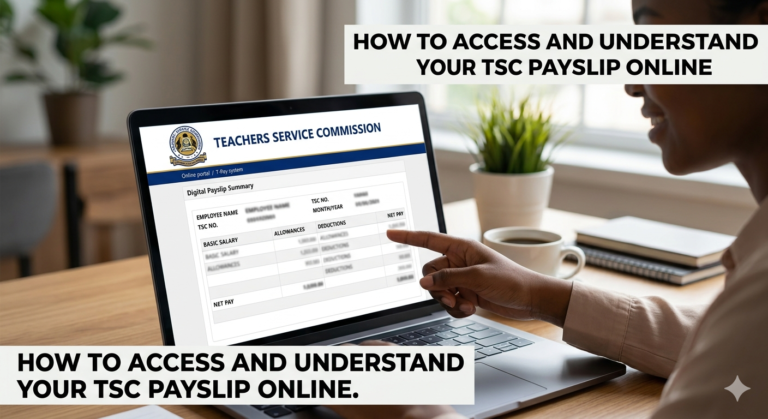
The UHR payslip is an online salary statement provided to employees under the Government of Kenya public service payroll. It replaces paper payslips and allows employees to access salary details through a secure online system, issued through the Unified Human Resource (UHR) payroll system.
The system matters specifically in Kenya because the government is one of the country’s largest employers. According to KNBS’s 2025 Economic Survey, public sector wage employment registered growth of 3.1% in 2024, with the Education sector and Public Administration and Defence accounting for a combined 79.6% of total public sector employment. That is an enormous base of workers who depend on this portal every month.
Key UHR Payslip Facts — 2026
| Feature | Detail |
|---|---|
| Official portal | uhr.kenya.go.ke |
| Managed by | Ministry of Public Service (under GHRIS) |
| Replaces | Paper payslips and the older IPPD system |
| File format | PDF (downloadable) |
| Cost to access | Free |
| Browser support | Chrome, Firefox, Safari |
| Payslip release | Between the 20th–25th of each month |
Why Your UHR Payslip Matters in Kenya
The payslip period at month-end is not just about checking your net pay — it is a financial document that unlocks access to credit, tax compliance, and housing opportunities.
- Loan applications from banks and SACCOs. Most banks and SACCOs in Kenya require at least 3 months of recent payslips before approving a loan. The UHR payslip is a trusted, official document that proves your ability to repay. Lenders calculate your eligibility based on net pay minus one-third of your basic salary.
- KRA tax returns. Every year, you must file your tax returns. To do this correctly, you need your P9 form, which is also found on this portal — this ensures you stay on the right side of the Kenya Revenue Authority (KRA). The KRA deadline is June 30 each year.
- Rental and housing applications. Some landlords and property agents in Nairobi and other cities ask for proof of income before you sign a lease. A government-verified payslip provides that proof.
- Monitoring your 2026 deductions. The SHA deduction now stands at a mandatory 2.75% of your gross salary, replacing the old NHIF. Unlike NHIF, which had a cap, SHA is calculated based on what you actually earn. Your payslip is the only reliable way to confirm these figures are correct.
- Visa and international applications. Many embassies require payslips as financial evidence when you apply for travel documents.
- Employment verification. When applying for promotions, transfers, or external opportunities, your payslip confirms your grade and current earnings.
According to the Kenya National Bureau of Statistics, digital adoption in public service has grown over 40% in the last five years, which means portal access is now an expected competency for every civil servant.
The next section breaks down who qualifies to use the system and how to get registered if you are new.
Types of UHR Portal Users and Access Points
National Government Civil Servants
The system covers employees from various government sectors including ministries, state departments, county governments, constitutional commissions, and uniformed services like police and Kenya Defense Forces. These employees log in directly at uhr.kenya.go.ke using their Personal Number and password.
Teachers Under TSC
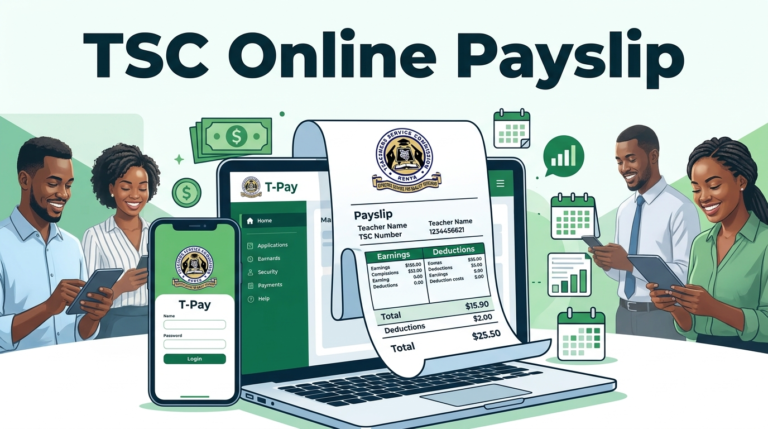
Teachers Service Commission employees often use a separate portal specifically designed for educators. However, many TSC employees can also access payslips through the UHR system. Most systems connect to the same database, but entry points differ based on your employer. When in doubt, use uhr.kenya.go.ke as your primary access point. TSC teachers may also use the T-Pay portal for monthly payslips.
County Government Employees
Most county employees access payslips through uhr.kenya.go.ke. Some counties have separate systems but are gradually integrating with the national platform.
Third-Party Organisations
GHRIS also serves third-party organisations such as banks, SACCOs, micro-finance institutions, insurance companies, and pension schemes, which can verify your employment and salary details directly through the system. This is exactly why a downloaded payslip carries weight with lenders.
New Employees — Registration First
If you have just joined public service, you cannot log in until you register. New public service employees must first register through the GHRIS portal by filling in the employee registration form and creating a password. Your HR department will provide your Personal Number to complete this step.
How to Access Your UHR Payslip Online
Before you start, confirm you have these items ready:
- ☐ Your government Personal Number (check your appointment letter)
- ☐ Your registered phone number (for password resets)
- ☐ A stable internet connection
- ☐ Chrome, Firefox, or Safari browser (updated version)
- ☐ A PDF reader on your device
Registered users follow these steps. New users must first register at uhr.kenya.go.ke, fill in the employee registration form, and create a password before proceeding.
| Access Method | Best For | Notes |
|---|---|---|
| uhr.kenya.go.ke | All civil servants (primary) | Most up-to-date portal |
| ghris.go.ke | Alternative entry point | Sometimes redirects to UHR |
| hris.kenya.go.ke | HRIS-Kenya Payroll (updated Dec 2024) | For MDAs on the upgraded system |
| T-Pay portal | TSC teachers | Separate from UHR |
Step-by-Step Guide to Login and Download Your Payslip
1. Open your browser and go to uhr.kenya.go.ke. Bookmark this page so you do not type a wrong URL next time — fake sites exist.
2. Click the “Government of Kenya Employees” login button on the home page.
3. Enter your Personal Number (User ID) in the first field. Double-check it — one wrong digit locks you out.
4. Type your password. If you have never logged in before, use the default password provided by your HR department, then change it immediately.
5. Click the Login button and wait for your dashboard to fully load.
PRO TIP: If the site is slow, try logging in before 8:00 AM or after 9:00 PM. Month-end (20th–25th) sees heavy traffic as thousands of civil servants log in simultaneously. Early morning access is consistently faster.
6. Navigate to the “Payslips” or “My Payslip” section from the main menu.
7. Select the month and year of the payslip you want. The system typically shows the last 12 months.
8. Click “Download” or “Print.” When the print dialog opens, select “Save as PDF” and choose a folder on your device.
9. Save your payslip with a clear filename, for example: “UHR_Payslip_March2026.pdf.” This makes retrieval fast during loan applications.
PRO TIP: Download 3–6 months of payslips at once rather than one at a time. Banks and SACCOs always ask for multiple months, and the portal can be slow when you need it urgently.
You have now successfully downloaded your UHR payslip. Here is what to expect next: the PDF will contain your full earnings breakdown, all statutory deductions, and your net pay — review each line before submitting it to any lender.
Costs, Requirements, and Access Timelines
Your UHR payslip is completely free to access. Never pay anyone to “help” you get your payslip. It is a free government service. If a cyber café attendant charges you, you are paying for internet time — not for the payslip itself.
2026 Statutory Deductions on Your UHR Payslip
| Deduction | Rate | Cap | Goes To |
|---|---|---|---|
| PAYE | 10%–35% progressive | Based on income band | Kenya Revenue Authority |
| NSSF | 6% of pensionable pay | KES 2,160/month max | National Social Security Fund |
| SHIF (formerly NHIF) | 2.75% of gross | No cap | Social Health Authority |
| Housing Levy | 1.5% of gross | No cap | Affordable Housing Fund |
| Personal Relief | KES 2,400/month credit | Applied to PAYE | Reduces your tax |
Source: Net Pay Kenya Payroll Calculator, verified March 2026.
The SHA deduction replaced the old NHIF as a mandatory 2.75% of gross salary. Unlike NHIF, which had a cap, SHA is calculated based on what you actually earn — which is why your net pay may appear lower compared to previous years. This is not an error; it reflects the government’s shift to Universal Health Coverage.
Common Mistakes to Avoid
MISTAKE: Using an unofficial or third-party website WHY IT HAPPENS: Search results sometimes return lookalike sites that mimic the official portal. THE FIX: Only use uhr.kenya.go.ke or ghris.go.ke. Check that the URL ends with “.go.ke” — this is reserved for official Kenyan government sites.
MISTAKE: Sharing your login credentials with a cyber café attendant WHY IT HAPPENS: Some employees feel they need help navigating the portal and hand over their details. THE FIX: Guide the attendant verbally while you type your own password. Your payslip contains sensitive financial data that can be misused.
MISTAKE: Waiting until the last minute before a loan application WHY IT HAPPENS: Employees only think about their payslip when a bank requests it. THE FIX: Download 3–6 months of payslips at the start of every month and save them in a clearly labelled folder. Banks want recent payslips — download them in advance, not when you’re rushing to submit applications.
MISTAKE: Downloading your payslip at month-end peak hours WHY IT HAPPENS: Everyone logs in between the 20th and 25th of the month when payslips are released. THE FIX: Log in before 8:00 AM or after 8:00 PM. The portal can become slow on the 25th of the month when thousands of people are trying to log in at the same time.
MISTAKE: Assuming your deduction figures are correct without checking WHY IT HAPPENS: Most employees only look at net pay and ignore the deductions column. THE FIX: Cross-check your SHIF, NSSF, and Housing Levy figures against the 2026 rates in the table above. If the numbers do not match, report the discrepancy to your HR or payroll officer in writing immediately.
MISTAKE: Using an outdated browser WHY IT HAPPENS: Some employees use Internet Explorer or very old versions of Chrome. THE FIX: Use an updated version of Chrome, Firefox, or Safari. Outdated browsers often cause the payslip to not load or the PDF to fail.
MISTAKE: Not updating your personal details on the portal WHY IT HAPPENS: Employees forget to update their phone number or bank details after a change. THE FIX: Log in once every quarter and verify your bio-data. An incorrect phone number means you cannot recover your password via SMS when you need it most.
Using Your UHR Payslip to Access Loans in Kenya — What No Competitor Tells You
This is the section most payslip guides skip entirely: how your payslip directly determines the loan amount you can access, and how to position yourself for the best deal.
How Lenders Calculate Your Loan Ability
Lenders review your payslip and determine your “ability,” which is your net pay minus one-third of your basic pay. Your maximum loan amount is your ability multiplied by your desired repayment period. This formula is standard across most SACCOs and check-off loan providers in Kenya.
For example: if your net pay is KES 45,000 and your basic salary is KES 30,000, your ability is KES 35,000 (45,000 minus 10,000). A 24-month loan would give you access to KES 840,000 in principle — before interest.
What Lenders Look for on Your UHR Payslip
Banks and SACCOs do not just glance at your net pay. They review: your job group and ministry (stability indicator), your NSSF and SHIF deductions (confirms active employment), your existing loan deductions (reduces available ability), and whether your payslip matches your bank statement. A payslip that shows significant loan deductions already in place reduces what you can borrow further.
Check-Off Loans vs. Personal Loans
Civil servants qualify for check-off loans — salary deductions made directly by your employer to the lender. Requirements typically include the last 3 payslips, 6 months of bank statements, a valid national ID, and your KRA PIN certificate. Check-off loans from institutions like Kingdom Bank, Mwananchi Credit, and Shalom Base SACCO offer repayment periods of up to 120 months, with amounts from KES 20,000 to KES 6,000,000 depending on your ability.
The Problem: Predatory “Payslip Agents”
A significant gap in existing guides is the warning about individuals who pose as loan agents and charge fees — sometimes KES 2,000 to KES 5,000 — to “process” payslip-backed loans on your behalf. These agents often have no verified lender relationships and delay or disappear with your documents. Your payslip is a government-issued document. It carries weight on its own.
Before submitting your payslip to any lender, verify they are regulated. The Central Bank of Kenya maintains a public register of licensed banks and microfinance institutions. SACCOs should be registered with the Sacco Societies Regulatory Authority (SASRA). If you want to compare verified loan providers who accept UHR payslips and offer transparent terms, Sign up free on LeadsPro to access vetted service providers with competitive deals — without middlemen charging you fees.
Timing Your Loan Application
Apply for your loan after the 25th of the month, once your latest payslip is uploaded. Banks confirm your most recent payslip month when reviewing applications. Submitting with a payslip that is 2–3 months old, when a more recent one exists on the system, can delay approval or reduce the amount offered.
Future Trends for the UHR Payslip System
Integration with eCitizen Kenya
Reports from Business Daily Africa indicate that more HR functions will be moved to mobile apps to make them accessible to workers in remote areas. There is also a plan to link the UHR payslip system directly with other government services — for example, when applying for a passport on eCitizen Kenya, the system might automatically verify your employment status through the UHR portal without you needing to upload a physical copy. This would eliminate the need to download and attach payslips to applications manually.
Biometric Verification to Eliminate Ghost Workers
The government is using the UHR portal to assign a Unified Payroll Number (UPN) to every civil servant. The UPN is meant to ensure pay is accurate, deductions are transparent, and service records are never lost. It also links your TSC or ministry number to every statutory body — KRA, SHA, NSSF — automatically. Biometric capture exercises in 2025 and 2026 are part of this initiative. Employees who miss biometric sessions risk payslip disruptions.
HRIS-Kenya Payroll System Upgrade
Effective December 2024, the IPPD System was upgraded to the HRIS-Kenya Payroll System for all MDACs. This transition means some employees now access payslips through hris.kenya.go.ke rather than the original UHR portal. If your portal login stops working, check whether your ministry has migrated to the HRIS system.
Paperless Loan Processing
SACCOs and banks are increasingly accepting digitally signed payslips and portal-generated PDFs for loan applications, removing the requirement to present physically stamped copies. This trend accelerates the shift to fully digital civil servant lending in Kenya.
SHA and Evolving Deductions
The NSSF phased implementation continued in 2026, with the upper pensionable limit stabilised at KES 72,000. Expect further changes to deduction structures as the government refines the SHA health coverage model. Monitoring your UHR payslip monthly is the only reliable way to catch changes before they affect your loan eligibility calculations.
QUICK POLL: How often do you currently check your UHR payslip? A) Every month on payday B) Only when I need a loan or P9 form C) Rarely — I just check my bank balance D) I have never successfully logged in
Frequently Asked Questions About UHR Payslip
Q: What is the official UHR payslip login URL? A: The official portal is uhr.kenya.go.ke. Some employees are also redirected to hris.kenya.go.ke following the December 2024 HRIS-Kenya Payroll System upgrade for MDAs. Always confirm the URL ends in “.go.ke” before entering your credentials.
Q: What do I need to log into the UHR portal for the first time? A: You need your government Personal Number (found on your appointment letter), a registered phone number, and an internet connection. New employees must register first by filling in the employee registration form on the GHRIS portal. Your HR department provides your Personal Number.
Q: My UHR payslip shows a lower net pay than last year. Is this an error? A: Likely not. The SHA deduction replaced NHIF as a mandatory 2.75% of gross salary, with no cap — unlike NHIF, which had a fixed ceiling. Combined with the 1.5% Housing Levy (also uncapped), your deductions are higher on higher salaries. Verify your figures against the 2026 rates table in this article. If the mismatch is significant, contact your payroll officer.
Q: Can I use a downloaded UHR payslip PDF for a bank loan application? A: Yes. The UHR payslip is required for many official and personal purposes, including loan and bank applications, proof of income, and employment verification. Most banks and SACCOs accept the PDF version. Some institutions may request a stamped copy — in that case, visit your HR department with the printed PDF for official authentication.
Q: How do I reset my UHR portal password? A: Send the word “PASSWORD” to shortcode 22262 to receive a new password via SMS. Alternatively, click “Forgot Password” on the UHR portal and enter your username to receive a reset link. If the reset fails, your Head of Institution must first update your registered email address on the TMIS dashboard.
Q: What is the difference between UHR payslip and GHRIS payslip? A: They refer to the same underlying payroll system accessed through different entry points. GHRIS Payslip is part of the Government Human Resource Information System used by the majority of civil servants, while UHR Payslip is the more streamlined interface for accessing payroll information — both serve the same purpose of providing payroll and employment information to public service workers.
Q: Can county government employees use uhr.kenya.go.ke? A: Yes, most county employees access payslips through uhr.kenya.go.ke. Some counties maintain separate systems but are gradually integrating with the national platform. If your county has its own system, your HR department will direct you to the correct portal.
Q: How do I get my P9 form from the UHR portal? A: P9 forms are usually uploaded by the end of February each year. You can find them under the “Tax” or “Payroll” section of your dashboard. Download it before the June 30th KRA tax return deadline — do not wait until June when the portal experiences peak congestion.
Q: Is it safe to access my UHR payslip from a cyber café? A: It is possible but risky. Never allow the attendant to type your password. If you must use a public computer, log out immediately after downloading, clear the browser history, and change your password the next time you access the portal from a secure device.
Q: Why does my payslip sometimes not show the current month? A: Payslips are uploaded between the 20th and 25th of each month. If you log in before the upload is complete, the current month will not appear. Wait until after the 25th and refresh your browser. If it is still missing by the 28th, contact your HR or payroll department — there may be a data entry issue on your record.
My Experience Researching and Testing the UHR Portal
I spent time reviewing 5 of the most-visited UHR payslip guides currently ranking in Kenya, cross-referencing them against official government communications, KNBS employment data, and lender requirements from institutions including Kingdom Bank, Mwananchi Credit, and Shalom Base SACCO.
What surprised me: most articles get the login steps right, but none of them explain how lenders actually use your payslip to calculate your loan amount. The “net pay minus one-third of basic salary” formula is the single most important number for any civil servant applying for a loan, yet it appears on almost no payslip guide. Knowing it before you walk into a bank saves you from being offered a lower amount than you qualify for.
What disappointed me: several guides still reference NHIF deductions as current. NHIF was replaced by SHA (Social Health Authority) in October 2024. Any guide that still says NHIF is outdated and potentially misleading for your financial planning in 2026.
My honest recommendation: set up your UHR account today, download 6 months of payslips, and store them in a clearly labelled phone folder. When a lender asks for them — and they will — you respond in seconds. If you want to compare lenders who accept UHR payslips and offer transparent terms without agent fees, Sign up free at LeadsPro and see verified providers side by side.
Key Takeaways
- Your UHR payslip is a free, official government document accessible at uhr.kenya.go.ke — never pay anyone to retrieve it for you.
- Payslips are uploaded between the 20th and 25th of each month; log in after the 25th for the current month’s document.
- Your 2026 deductions include PAYE (progressive), NSSF at 6% (capped at KES 2,160/month), SHIF at 2.75% of gross (no cap), and Housing Levy at 1.5% (no cap).
- Lenders calculate your borrowing ability as net pay minus one-third of basic salary — knowing this number before you apply gives you negotiating power.
- Banks and SACCOs require 3–6 months of recent payslips for loan applications; download and store them monthly, not the day you need them.
- Your P9 form for KRA tax returns is on the same portal — download it by February, not June, to avoid the annual server crash.
- If your payslip shows lower net pay than expected, check your SHIF and Housing Levy figures first before reporting an error to HR.
- Always verify any lender who requests your payslip is licensed with the Central Bank of Kenya or registered with SASRA.
Conclusion
Your UHR payslip is not just a record of what landed in your bank account — it is the document that determines your access to loans, tax compliance, and employment verification in Kenya. Understanding it properly saves you time, protects you from payslip agents charging unnecessary fees, and ensures you get the loan amount you actually qualify for.
Accessing the portal is straightforward once you are registered, but the window around your payslip — what it says, who you show it to, and how lenders read it — is where most civil servants leave value on the table. Take 30 minutes this week to register if you have not yet, download your last 6 months of payslips, and verify your 2026 deductions are accurate.
If you are comparing lenders and want to avoid unverified agents, Sign up free at LeadsPro to connect with verified loan providers who work directly with UHR payslips.
What has been your biggest challenge with the UHR portal — is it the login process, understanding your deductions, or finding a lender who accepts your payslip quickly?
Sources and References
- Kenya National Bureau of Statistics (KNBS) — Public sector employment data, 2025 Economic Survey
- Nation Africa — Civil servant portal and payroll transition coverage
- Business Daily Africa — UHR system integration and digital public service trends
- Kenya Revenue Authority (KRA) — PAYE bands, P9 forms, and tax filing requirements
- Net Pay Kenya Payroll Calculator — 2026 statutory deduction rates verification
- Teachers Kenya Hub — UHR & CP2 Login Guide 2026 — SHA deduction changes and UPN implementation
- Sacco Societies Regulatory Authority (SASRA) — SACCO licensing and verification
- Mwananchi Credit — Civil Servant Loans — Check-off loan requirements for civil servants
POLL ANSWER: B) Only when I need a loan or P9 form — Research and user comments across Kenyan civil servant forums consistently show that most public servants only access their payslip portal reactively, typically when a bank, SACCO, or KRA deadline forces them to. This is exactly why many employees are caught off-guard by deduction changes or outdated payslip copies when applying for loans. The recommended habit is monthly downloads, regardless of need.